
Léger, Fernand
Initially close to cubism, Fernand Léger's art quickly moved away from it, developing a style that emphasized dynamic forms and expressed the social climate of the time. Read the biography
Affichage de 13–24 sur 40 résultatsTrié du plus récent au plus ancien
-
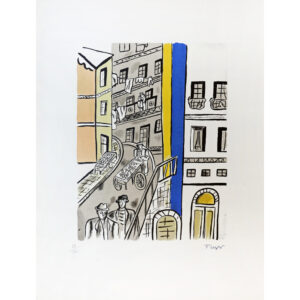
The City, The Street (pl.5)
Fernand Léger
850€ -
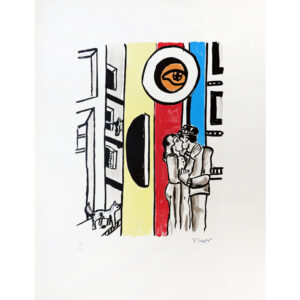
La Ville, Lovers in the street (pl.6)
Fernand Léger
SOLD -
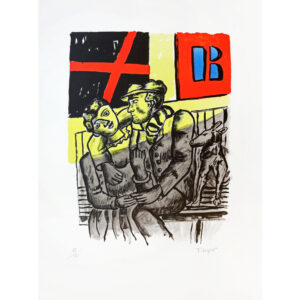
The City, Lovers (pl.7)
Fernand Léger
1 000€ -
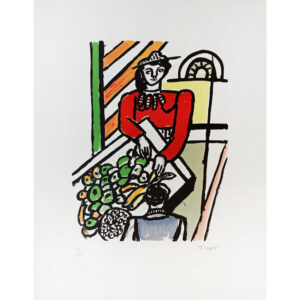
La Ville, La marchande des quatre saisons (pl.8)
Fernand Léger
SOLD -

La Ville, Le Remorqueur (pl.9)
Fernand Léger
SOLD -
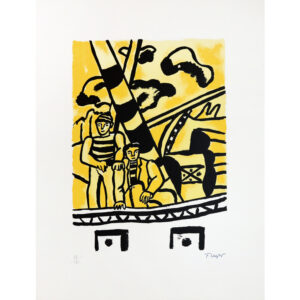
La Ville, Le Remorqueur jaune (pl.10)
Fernand Léger
SOLD -
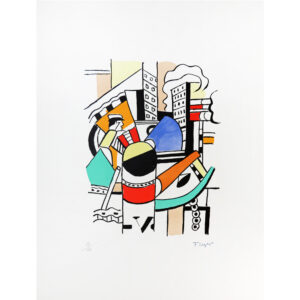
The City, The Tugboat in the city (pl.11)
Fernand Léger
SOLD -
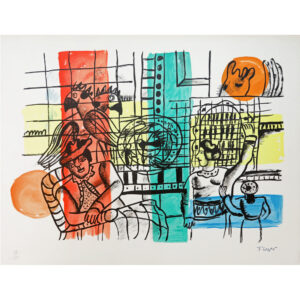
La Ville, La marchande d'oiseaux (pl.12)
Fernand Léger
SOLD -
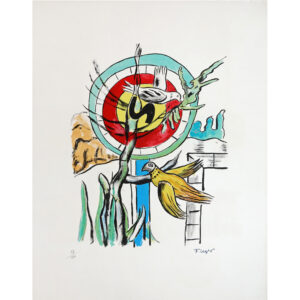
La Ville, The two birds (pl.13)
Fernand Léger
850€ -
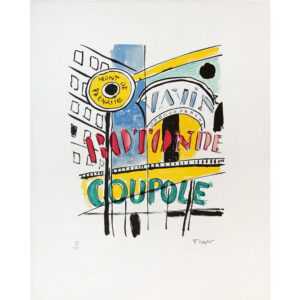
La Ville, Montparnasse (pl.14)
Fernand Léger
SOLD -

La Ville, Le Café (pl.15)
Fernand Léger
700€ -

The City, The Roofs (pl.16)
Fernand Léger
700€
Biography
Né à Argentan en 1881, Fernand Léger fait des études d’architecture à Caen avant de se rendre à Paris en 1900 et se tourne peu à peu vers la peinture. Il fréquente différentes académies, en particulier l’académie de la Grande Chaumière. En 1907, comme nombre d’artistes, il est très marqué par la rétrospective consacrée à Paul Cézanne. Il se rapproche de deux groupes d’artistes parisiens : d’un côté, La Ruche, où il fréquente Marc Chagall, Chaïm Soutine et Blaise Cendrars, de l’autre, le Bateau-Lavoir, où Pablo Picasso et Georges Braque travaillent l’esthétique cubiste. Avec ces derniers, Léger s’oppose à l’impressionisme, vu comme un courant peu novateur. Cependant, son art s’éloigne assez rapidement du cubisme pour développer son style personnel, qui met l’accent sur le dynamisme des formes et exprime le climat social de l’époque. Cet intérêt politique l’engage dans une voie pédagogique : il écrit ainsi de nombreux articles, ouvre une académie dans son atelier et fonde L’Esprit Nouveau avec Le Corbusier et Amédée Ozenfant.
In the 1940s, Léger fled to the United States, where he rubbed shoulders with André Breton, Max Ernst, Marc Chagall and Piet Mondrian. He took an active part in local artistic life, inspired by the mechanization of American society at the time. On his return to France, he joined the Communist Party and began experimenting with new techniques, notably with commissions for stained glass windows for churches in Assy and Audicourt. Léger also took part in monumental projects, notably when he created a fresco for the façade of the Gaz de France building in Alfortville, winning the grand prize at the Sao Paulo Biennial in 1955. He died the same year in Gif-sur-Yvette.
Il est aujourd’hui connu pour ses œuvres imposantes comme Composition aux deux perroquets, pour son intérêt pour le cinéma (Charlot cubiste) et pour ses illustrations (notamment pour le poème Liberté de Paul Éluard).