
Jenkins, Paul
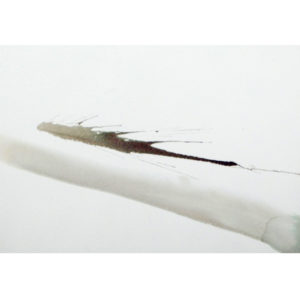
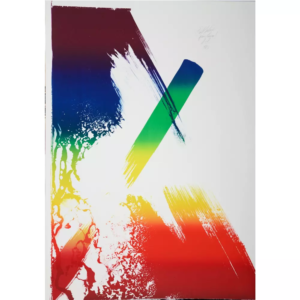
Paul Jenkins' artistic influences are manifold, making him an artist who is difficult to classify. Through various techniques, he has explored the brushless method: for example, pouring colors into the hollow of a sheet and swinging it - sometimes guiding it with a knife - causing the pigments to set according to a choreography imposed by Jenkins. Read the biography
Affichage de 13–17 sur 17 résultatsTrié du plus récent au plus ancien



Biography of Paul Jenkins
Paul Jenkins was born on July 12, 1923 in Kansas City, Missouri, USA.
In his youth, he studied art at the Kansas City Art Institute. He also worked with the ceramist James Weldon, who would have a great influence on his approach to colour in painting. He then enrolled at the Cleveland Play House, a drama school, where he worked mainly on sets.
After World War II, Paul Jenkins moved to Pittsburg, Kansas, where he was part of a group of artists and writers supported by patron Gladys Schmidt. These artists exhibited at the Outline Gallery, directed by Elizabeth Rockwell, a meeting point for avant-garde artists. In 1948, he left for New York and joined the Art Students League, where he became interested in the theories of the Russian mystic George Gurdjieff, particularly his theses on spiritual transcendence and the definition of objective art.
En 1953, il s’installe à Paris où il fait la rencontre d’artistes tels que Jean Dubuffet, Georges Mathieu, Pierre Soulages, Sam Francis et Claire Falkenstein. En 1955, il présente sa première exposition personnelle à la galerie Zoe Dusanne de Seattle et participe à l’exposition Artistes étrangers en France au Petit Palais à Paris. La galerie Stadler de Paris accueille ses œuvres l’année suivante et la Martha Jackson Gallery de New York lui consacre à son tour une exposition personnelle.
His artistic influences are manifold, making him a difficult artist to classify: he is close to Jackson Pollock and Mark Rothko, but draws his inspiration more deliberately fromHenri Matisse or Vassily Kandinsky. What's more, his approach to painting is linked to a certain mysticism: among his influences are the teachings of Zen Buddhism and the Yi Jing, a Chinese treatise whose title can be translated as "Book of Transformations".
À travers différentes techniques, Jenkins a exploré la méthode sans pinceau : par exemple, en versant des couleurs dans le creux d’une feuille et en la balançant – parfois en la guidant avec un couteau – faisant que les pigments se fixent selon une chorégraphie imposée par l’artiste. La toile devient ainsi un espace de redéfinition de la couleur, de la lumière et de l’espace. En effet, pour Jenkins, la matière peinture devient un sujet en lui-même : « La couleur est une sensation et non une manifestation extérieure de la nature »[1]. L’œuvre n’a pas vocation à représenter quelque chose, mais est un phénomène, comme en témoignent les titres de ses œuvres.
À la fin des années 80, Jenkins reçoit de nombreuses commandes publiques internationales. Il réalise à cette période un ensemble important de lithographies et édite un album en 1998 avec la Bouquinerie de l’Institut – aujourd’hui Galerie de l’Institut – centré sur le chamanisme et l’expression par la couleur de l’expérience indicible.
He dies in New York City on June 9, 2012.
[1] Quoted in BOSQUET, Alain, Paul Jenkins, H. Veyrier, 1982