
Hayter, Stanley William
Stanley William Hayter, born December 27, 1901, died May 4, 1988, was a British painter and printmaker associated with the New School of Paris. His work is of major importance in the history of modern printmaking. Read the biography
Affichage de 1–12 sur 19 résultatsTrié du plus récent au plus ancien
-

Scattered leaves
Collective
6 000€ -
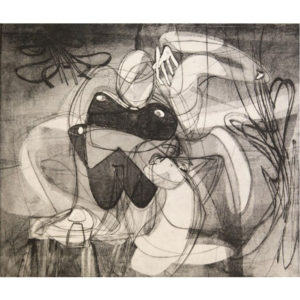
Octopod
Stanley William Hayter
4 500€ -
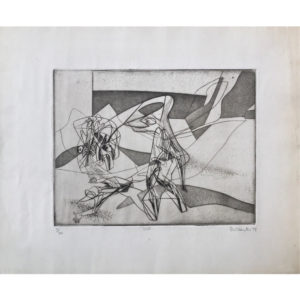
Rape
Stanley William Hayter
RESERVED -
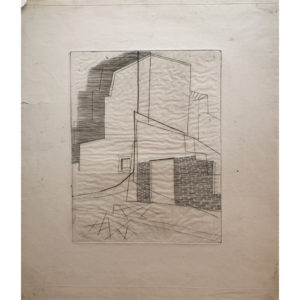
Street
Stanley William Hayter
SOLD -
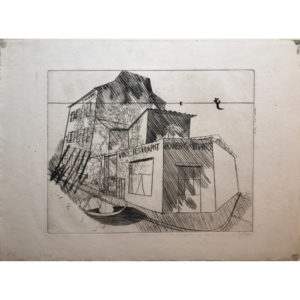
Rue du repos
Stanley William Hayter
700€ -
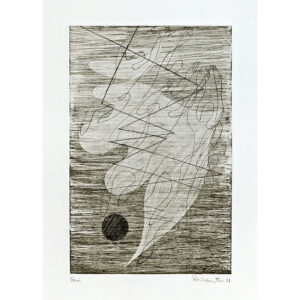
Panel V for the Apocalypse
Stanley William Hayter
1 300€ -

Characters threatened by flame
Stanley William Hayter
2 300€ -
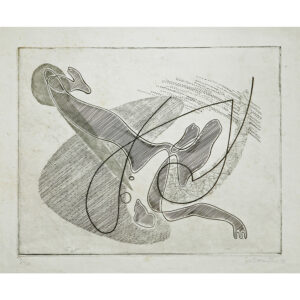
Murder
Simon William Hayter
2 300€ -
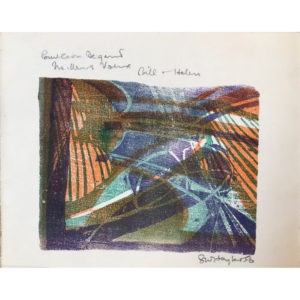
Greeting Card 1956
Stanley William Hayter
350€ -
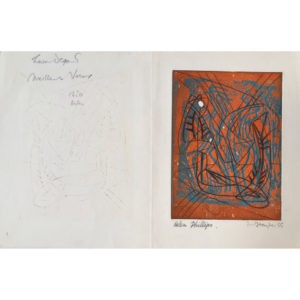
Greeting Card 1955
Stanley William Hayter
SOLD -
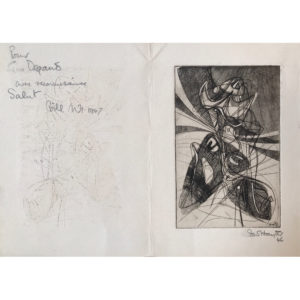
Stanley William Hayter, Greeting Card 1946
SOLD -
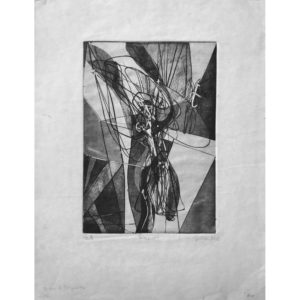
Descent
Stanley William Hayter
2 300€
Biography of Stanley William Hayter
Born in London in 1901, Stanley William Hayter trained as a chemist and geologist, before moving to Paris in 1926. He began taking classes at the Académie Julian, but soon left and met the engraver Joseph Hecht. In contact with Hecht, Hayter decided to take up engraving and exhibited at the Salon d'Automne in 1926. Appreciating collective work, he attracted many artists around him, leading to the founding of Atelier 17, officially opened in 1933.
L’atelier fonctionne comme un projet collectif sans contraintes financières ou artistique : Hayter demande seulement l’argent nécessaire à l’achat de matériel et n’impose pas de style particulier. Fort de sa formation de chimiste qui l’a amené à manipuler les couleurs, il propose ses conseils et met à disposition un lieu pour tous les artistes souhaitant innover.
During the war, he went into exile in New York and his works were exhibited at MoMA, alongside those of his Atelier 17 collaborators. Driven by his collective art project, Hayter welcomed many major artists into his studio, including Joan Miró, Marc Chagall, Max Ernst, André Masson, Pablo Picasso, Pierre Alechinsky...
Hayter produit une importante quantité d’estampes. Son oeuvre évolue de la figuration vers l’abstraction ; il expérimente avec la couleur, et se rapproche de l’art optique dans les années 60. Il grave ses propres travaux, illustre des ouvrages et produit de nombreuses œuvres jusqu’à la fin de sa vie en 1988.