
Lurçat, Jean
Jean Lurçat, born on July 1ᵉʳ, 1892 and died on January 6, 1966, is the author of a wide variety of works that marked the 20th century, including lithographs, tapestries, jewelry, ceramics...He is also recognized for his many illustrations of literary works. Read biography
Affichage de 1–12 sur 15 résultatsTrié du plus récent au plus ancien
-

Harlequin in Toupies
Jean Lurçat
1 500€ -

Underwater Funds
Jean Lurçat
SOLD -

Seafood
Jean Lurçat
SOLD -

Rooster and Red Sun
Jean Lurçat
SOLD -

Toilet
Jean Lurçat
SOLD -

Sketch of Smyrna
Jean Lurçat
SOLD -
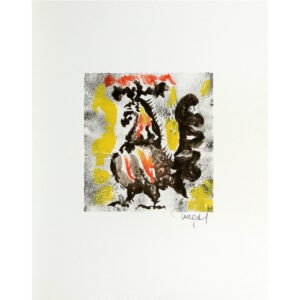
Rooster
Jean Lurçat
SOLD -

Blue Warrior
Jean Lurçat
250€ -
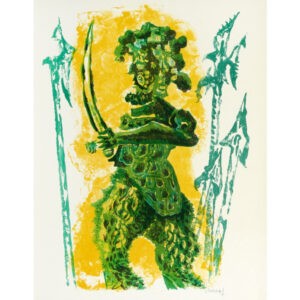
Green Warrior
Jean Lurçat
200€ -
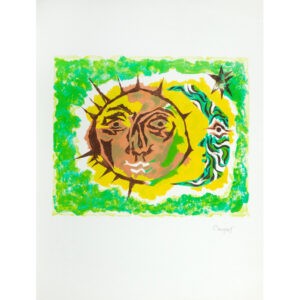
Moon and Sun or Night and Day
Jean Lurçat
180€ -

Owl
Jean Lurçat
SOLD -

Fruit and fires
Jean Lurçat
120€
Biography
Born in Bruyères in 1892, Jean Lurçat studied science before turning to painting. He went to Paris in 1912 to study at the Beaux-Arts, then enlisted in the army in 1914. When he fell ill, he was forced to retire and return to his parents' home. He took advantage of his convalescence to paint, and in particular produced his first lithograph.
He exhibited for the first time in Zurich in 1917, and after traveling throughout Europe, he settled in Paris in 1920, where he exhibited for the first time in 1922. Lurçat then participated in the creation of sets and costumes for various plays, such as the ballet Le Jardin Public, inspired by André Gide's Faux monnayeurs. In 1923, he travelled again, discovering Spain and North Africa.
Durant les années 30, il connaît un succès mondial et est exposé à Paris, Londres, New-York et Chicago. Ses œuvres sont mises à l’honneur lors de l’exposition « Sélections » à New-York aux côtés de Pablo Picasso, Henri Matisse, Georges Braque and Raoul Dufy. He worked in collaboration with Tzara in 1941 and 1942. During the Occupation, he joined the Communist Resistance with Tristan Tzara and edited the magazine Freedom. Lurçat consacre une grande partie de sa pratique à la tapisserie, technique qu’il renouvelle en profondeur, et réalise notamment lTribute to the dead of the Resistance and the Deportation for the Musée d'Art Moderne de Paris in 1954. He also publishes books on tapestry and lectures around the world. His work is highly varied, and includes lithographs, tapestries, jewelry and ceramics. He is also renowned for his numerous illustrations of literary works by Paul Éluard, Guillaume Apollinaire and Pablo Neruda. He died on in Saint-Paul-de-Vence.